
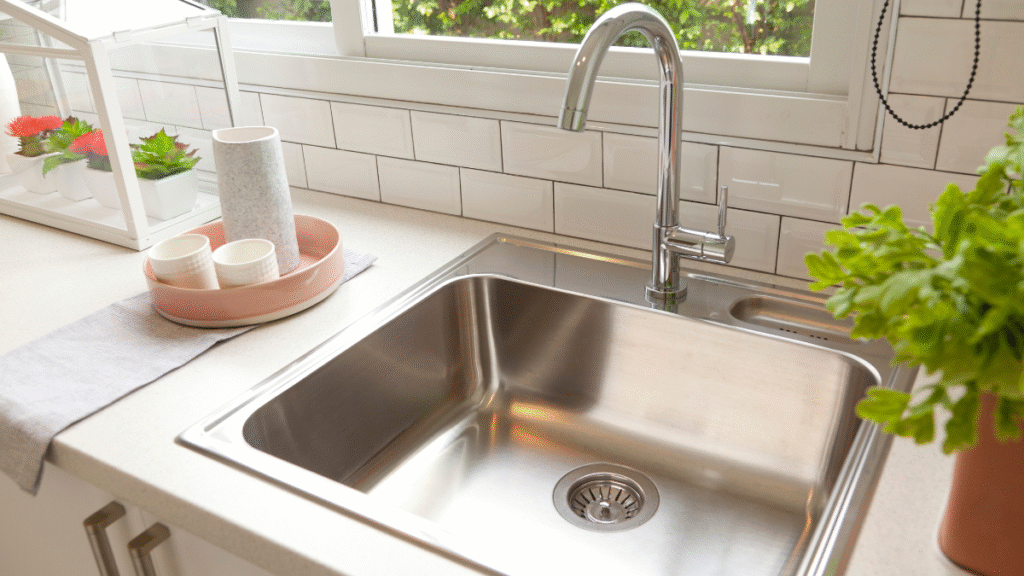
Choosing the right kitchen sink for your design style is important so that you can create a cohesive aesthetic, one in which the different elements of your kitchen complement each other.
There are a few different kitchen sink styles, and they all look good in their own type of settings.
In this post, we’re going to tell you about the different sink types, and then guide you on how you can find the right one based on the overall design theme of your kitchen.
Let’s get started.
Common Types of Kitchen Sinks
When it comes to describing the “types” of kitchen sinks, there are a few different classifications that one can make. Colors, shapes, etc. However, the most practical and useful of classifications are two: configurations/shape and installation styles.
The configuration/shape and the installation style have the most bearing on the “design” side of the kitchen. Colors and finishes can be adjusted and selected with more ease and flexibility. (There will be a section dedicated to that in the post as well, don’t worry.)
Kitchen Sink Installation Styles
| Installation Style | Design Description |
| Top-Mount (Drop-In) | Sink sits on the countertop with a visible rim, creating a defined visual boundary |
| Undermount | Sink is installed beneath the counter edge, allowing a clean, uninterrupted surface line |
| Flush-Mount | Sink edge aligns perfectly with the countertop surface, looks precise and intentional |
| Integrated | Sink and countertop form a single continuous structure with no visible joints |
Kitchen Sink Shapes and Configurations
| Shape / Configuration | Design Description |
| Single-Bowl | One continuous basin; visually simple and dominant |
| Double-Bowl | Two basins within one unit add symmetry or structured complexity |
| Farmhouse (Apron-Front) | Exposed front panel becomes a focal point, independent of bowl count |
| Corner | Designed to fit into a corner or angled layout, alters counter geometry |
| Workstation | Includes internal ledges for accessories, a layered and utility-driven appearance |
Moving on, we’re going to discuss some steps and ways in which you can choose the best kitchen sink for yourself. We’ll refer back to these types that we’ve mentioned above.
How to Choose the Right Kitchen Sink Style for Your Existing Design?
Here are the main things that you need to check in your existing kitchen design to decide which sink would be ideal for you.
- Construction/architecture style
- Size of the kitchen/available space
- Minimalist/maximalist theme
- Existing colors/hues
Let’s break them down one by one.
Construction / Architecture Style
Your kitchen’s architectural style sets the visual rules for everything inside it, including the sink. The goal is alignment. The sink should feel like it belongs to the space rather than standing out as a separate element.
When we talk about architectural styles, there are a few major ones, including:
- Modern
- Transitional
- Traditional
- Rustic
- Industrial
Clean-lined kitchens benefit from sinks that minimize visual breaks. More expressive or traditional kitchens can handle sinks that act as focal points. Once you identify the dominant architectural theme of your kitchen, choosing the right sink style becomes much simpler.
The table below shows how common kitchen design styles pair best with specific sink installation styles and configurations.
| Kitchen Architecture Style | Best Sink Installation Style | Best Sink Configuration | Design Reasoning |
| Contemporary | Undermount or Flush-Mount | Single-Bowl or Workstation | Emphasizes clean transitions, uninterrupted surfaces, and functional precision |
| Modern | Integrated or Flush-Mount | Single-Bowl | Prioritizes seamless geometry and minimal visual noise |
| Transitional | Undermount | Single or Double-Bowl | Balances modern cleanliness with familiar structure |
| Traditional | Top-Mount or Undermount | Double-Bowl | Supports symmetry and classic kitchen layouts |
| Rustic | Top-Mount or Undermount | Farmhouse (Single or Double) | Allows the sink to act as a strong visual anchor |
| Farmhouse | Undermount or Top-Mount | Farmhouse (Apron-Front) | Highlights the exposed apron as a defining feature |
| Industrial | Undermount or Flush-Mount | Single-Bowl or Workstation | Reinforces utility-driven, functional aesthetics |
Size of the Kitchen/Available Space
The size of your kitchen and the available space also play a role in deciding the sink style that you should get.
The rule here is simple.
Bigger kitchens can work with bigger sink styles, while smaller kitchens need smaller sinks. There are some kitchens that fall in the middle of the two sizes, and can work with both large and small sinks.
Here is a little table that describes kitchen sizes along with the ideal sink type:
| Kitchen Size | Ideal Sink Type |
| Small | Single-bowl sink or corner sink with undermount installation |
| Medium | Single or double-bowl sink with undermount or flush-mount installation |
| Large | Double-bowl or workstation sink with undermount or flush-mount installation |
| Extra-Large | Workstation or integrated sink, single or double-bowl, depending on workflow |
Maximalist/Minimalist Theme
Is your kitchen minimalist or maximalist? Does it have a sleek and baring appearance or one that is loaded with decorative elements, utensils, and appliances?
If your kitchen leans the minimalist way, then you should get a sink that likewise has a sleek and “minimal” look to it, such as a single-bowl, integrated sink, or a single-bowl, undermount sink.
On the other hand, if your kitchen leans more towards the maximalist side, go for something bigger. An apron-front sink or a double sink with a drop-in installation can look right in place.
Existing Colors/Hues
As we mentioned earlier, while the appearance and configuration of the sink play a major role and all, it’s also important for the color to be complementary to the kitchen space.
When choosing a sink, you have to make sure that you pick a finish/color that looks good with the existing elements in your kitchen.
Below, we’re going to provide a list of the common colors/hues that you can find in kitchen sinks. The purpose of this list is so that you can know that there is a color out there that you can find for your space, even if you don’t find it at a specific retailer.
- Stainless Steel: Neutral and versatile. Works with most kitchen styles. Pairs easily with appliances.
- White: Clean and bright. Common in ceramic and fireclay sinks. Fits traditional and farmhouse kitchens.
- Black: Bold and modern. Adds contrast. Works well in contemporary spaces.
- Gray: Subtle and balanced. Blends with stone countertops. Suitable for modern cabinetry.
- Beige / Cream: Warm and soft. Complements natural wood. Fits earth-toned kitchens.
- Brown / Earth Tones: Rustic and natural. Pairs well with wood and stone. Works with warm lighting.
- Copper: Warm and distinctive. Develops a natural patina over time. Suits farmhouse and eclectic styles.
- Bronze: Darker and muted. Fits traditional kitchens. Works with vintage-inspired designs.
- Gold / Brass Tones: Decorative and eye-catching. Best used as statement pieces. Pairs with matching fixtures.
Considerations Beyond the Aesthetics
While the purpose of this post is to largely help readers select the right sink in terms of appearance, it’s important to make other considerations as well.
In other words, you should not go for a sink that looks good in your space. There are a few things to check other than that, including:
- Material: Different sink materials affect durability, maintenance, and longevity. Choose one that matches how heavily your kitchen is used.
- Size and Depth: The sink should fit your cabinet base and countertop cutout. Depth matters for comfort and splash control.
- Drain Placement: Centered or offset drains impact usable space inside the sink. This matters when washing large cookware.
- Compatibility With Fixtures: Faucets, soap dispensers, and accessories must align with the sink design. Check hole configuration in advance.
- Noise Reduction: Certain materials and coatings reduce sound when washing dishes. This can make a noticeable difference in daily use.
- Budget: Appearance should align with cost. Balance visual appeal with long-term value and performance.
In order to buy a sink that offers you excellent aesthetics along with all of these favorable qualities, you should choose a reliable retailer that is known for selling premium kitchen sinks.
Don’t just go to any other shop or any other website. Take a few minutes to research a little bit. You’ll enjoy the results for months and years to come as a result of your informed purchasing decision.
Wrapping Up
When choosing a sink for your kitchen, there are a few major factors that you need to consider. There isn’t a lot of complexity involved.
In the post above, we’ve detailed those factors in detail so that you can make your next purchase without a second’s worry.