
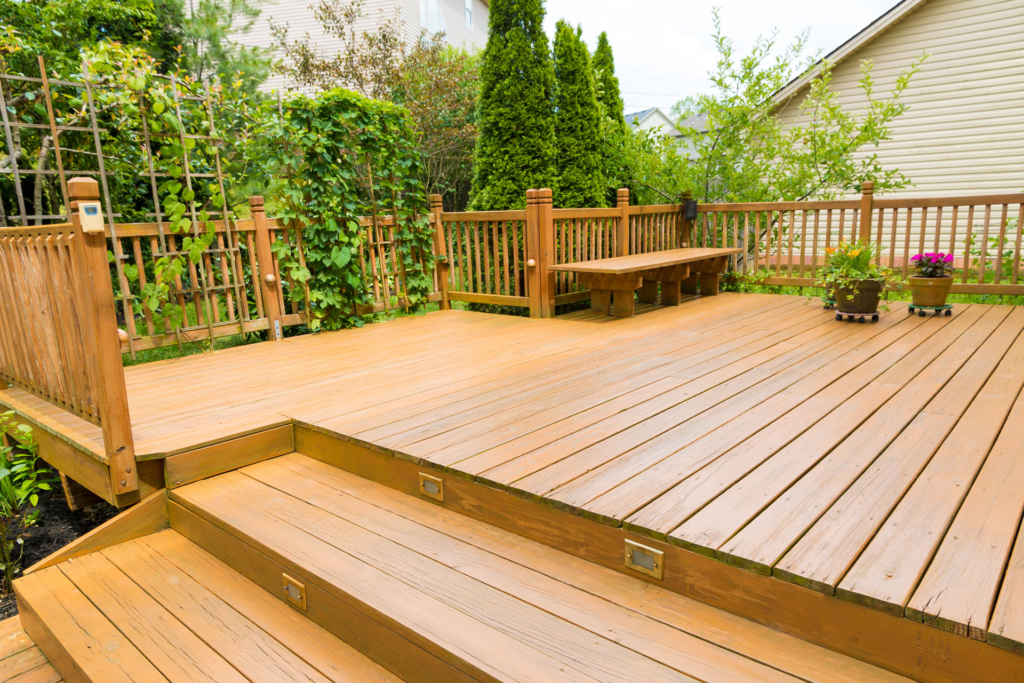
The first question almost every homeowner asks is also the hardest to answer cleanly: what does it actually cost to build a deck in Canada? The honest reply is that the number swings widely depending on size, materials, and where you live. A small pressure-treated platform in a rural area and a multi-level composite deck in downtown Toronto can differ by tens of thousands of dollars.
What follows is a practical breakdown based on real project ranges across the country. The goal is to help you budget with realistic expectations rather than a single misleading figure, because nothing derails a backyard project faster than a quote that lands twice as high as you planned.
The Short Answer: Average Deck Cost in Canada
Most homeowners spend between $25 and $75 per square foot for a fully built deck, including materials and labour. That means a standard 300-square-foot deck typically falls somewhere between $7,500 and $22,500 depending on the choices you make.
The wide range is not random. It comes down to three levers: the material you choose, the complexity of the design, and your regional labour rates. Pull all three toward the budget end and you land near the bottom. Choose premium composite, add levels and railings, and build in a high-cost city, and you climb fast.
Cost Breakdown by Material
Material is the single biggest factor in your total. Here is how the common options compare on a per-square-foot installed basis.
| Material | Cost per Sq. Ft. (Installed) | 300 Sq. Ft. Estimate |
| Pressure-treated wood | $25–$40 | $7,500–$12,000 |
| Cedar | $35–$55 | $10,500–$16,500 |
| Composite | $45–$70 | $13,500–$21,000 |
| PVC (capped) | $50–$80 | $15,000–$24,000 |
| Tropical hardwood | $50–$75 | $15,000–$22,500 |
Pressure-treated lumber remains the budget standard, but remember its lower upfront price comes with higher long-term maintenance spending. Composite costs more at the start and far less over twenty years once you factor in skipped staining and sealing.
What Else Drives the Final Price
The board you walk on is only part of the bill. Several other elements quietly add up.
Size and Height
Larger decks cost more in total but often less per square foot, since fixed costs like permits and mobilization spread across more area. Height matters too. A deck more than a metre off the ground needs additional structural support, taller posts, and code-required railings, all of which raise costs.
Railings and Stairs
Railings are frequently underestimated. Aluminum or glass railing systems can add $50 to $150 per linear foot. Stairs are labour-intensive and can add several hundred to a few thousand dollars depending on the run.
Footings and Permits
Canadian frost lines mean footings must be dug deep, often four feet or more, to sit below the frost depth. This adds excavation cost. Most municipalities also require a building permit for decks above a certain height, typically running $100 to $500.
Design Complexity
A simple square deck is cheap to frame. Multi-level layouts, curves, built-in benches, planters, and pergolas all add material and labour. Custom features can easily add 20 to 40 percent to a base price.
Material vs. Labour: How the Budget Splits
A useful rule of thumb is that labour accounts for roughly half of a typical deck budget, sometimes more for complex builds.
- Materials: 45–55 percent of total cost
- Labour: 45–55 percent of total cost
- Permits and extras: 5–10 percent of total cost
This is why getting accurate quotes matters. Experienced deck builders Decksforlife price the full scope, including footings, flashing, and disposal, rather than quoting only the visible surface and surprising you with add-ons later.
How to Budget Smart Without Cutting Corners
You can control cost without compromising on a deck that lasts. A few strategies make the biggest difference.
Choosing a simpler rectangular footprint keeps framing efficient and cheaper. Building closer to ground level avoids the structural and railing costs that come with elevation. Selecting mid-range composite rather than premium PVC captures most of the low-maintenance benefit at a lower price. Booking your build in the off-season, such as early spring or late fall, can sometimes secure better contractor availability and rates.
What you should never trim is the structural foundation. Skimping on footings, joist quality, or proper flashing is where decks fail in our climate. Reputable deck contractors Decksforlife will steer your savings toward finishes and features rather than the framing that keeps the whole structure safe through freeze-thaw seasons.
Frequently Asked Questions
How much does a 20×20 deck cost in Canada? A 400-square-foot deck typically costs between $10,000 and $30,000 installed, depending on material and design complexity.
Is it cheaper to build a deck yourself? DIY saves on labour, which is roughly half the cost, but mistakes in footings, structure, or permits can be expensive to fix. It suits simple ground-level builds more than elevated or complex ones.
Does a deck add value to a Canadian home? Yes. A well-built deck commonly returns a meaningful portion of its cost at resale and significantly improves the appeal of a home’s outdoor living space.
What is the cheapest way to build a deck? A simple, ground-level pressure-treated deck with a rectangular shape and minimal railings is the most budget-friendly option.
The Bottom Line
The cost to build a deck in Canada realistically ranges from about $7,500 for a modest pressure-treated build to well over $20,000 for a premium composite design with railings and multiple levels. Material choice, size, height, and regional labour rates drive the final figure. The smartest approach is to spend carefully on finishes and features while never compromising on the structure underneath, because in a climate as demanding as ours, the foundation is what determines whether your investment lasts a decade or a lifetime. Read More at https://mintpaldecor.org/