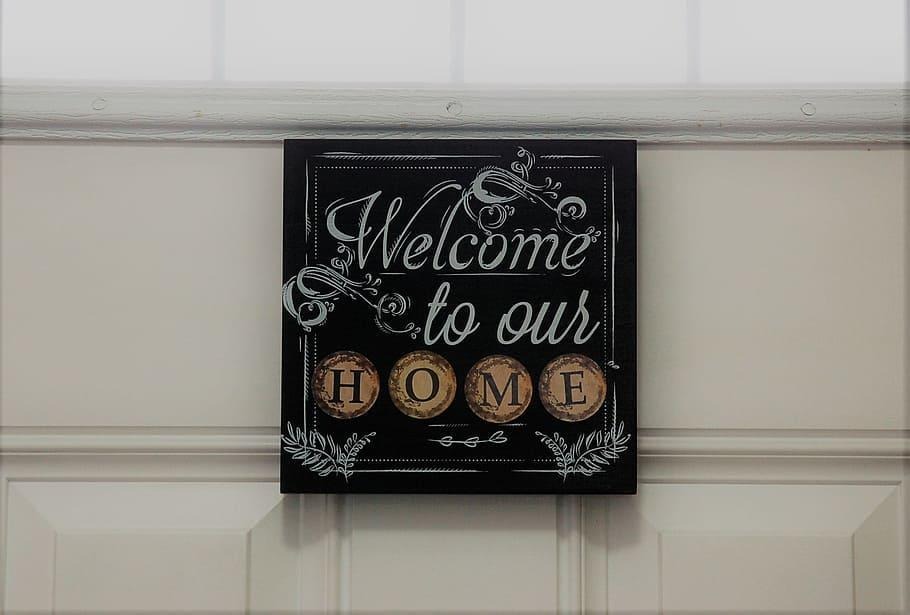
Welcome signs sit in one of the more punishing positions on any home. They mount near the front door, where direct sun, blowing rain, road dust, and seasonal temperature swings hit them constantly, and they need to look intentional every single time someone walks up the path. Most decorative signs sold for porch use are not built for that kind of exposure. They are built for the showroom photograph and the first six months on a wall. Past that, the failure modes show up: warped boards, peeling paint, faded lettering, rust streaks at the screw heads. Aluminum has quietly displaced most of the alternatives in this category, and the reasons are worth understanding before specifying signage for a contemporary entry.
The Outdoor Failure Modes That Matter
A welcome sign fails in predictable ways depending on what it is made of. Wooden signs absorb moisture, swell, dry, and split. The painted finish on top of the wood, however well applied, eventually cracks along those seams. Steel signs corrode at the fastener holes first, then bleed rust streaks down the wall surface beneath them. Standard plastic signs lose their UV stabilizers within a few seasons and turn brittle, yellowed, or chalky. Even high-end ceramic and stone signs can chip in freeze-thaw conditions or where the mounting hardware works loose over time.
None of these materials is unusable; they each have applications where their weaknesses are tolerable. But for a piece of porch hardware that needs to look architectural ten years after installation without ongoing maintenance, the candidate list narrows quickly. Aluminum has emerged as the practical winner because its failure modes are minor where other materials’ failures are dramatic.
Why Are Aluminum Welcome Signs Better for Modern Porches?
Outdoor porch decor remains exposed to sunlight, rain, wind, and humidity throughout the year, so material selection determines how long signage maintains its structure and appearance. Wood signs can warp after repeated moisture exposure, painted surfaces often peel under direct sunlight, and thin decorative materials frequently crack during seasonal temperature changes. Modern exterior styling also requires finishes that stay visually clean without demanding constant maintenance or repainting.
Many homeowners choose aluminum welcome signs because aluminum combines weather resistance, lightweight durability, and contemporary styling in a material designed for long-term outdoor use. Powder-coated finishes help the sign resist fading while preserving matte black, bronze, white, or brushed-metal color consistency across changing weather conditions. Aluminum also supports sharper lettering and cleaner geometric lines than heavily distressed decorative boards, which helps modern porches maintain a minimalist appearance.
Weight influences installation as much as durability. Aluminum signs mount securely on siding, brick, stucco, wood columns, and masonry surfaces without placing unnecessary strain on mounting hardware. Vertical aluminum signs create visual height beside narrow entryways, while horizontal layouts integrate naturally with benches, planters, and modern lighting fixtures. Consistent finishes across porch decor, exterior hardware, and entry signage strengthen curb appeal and create a more unified architectural presentation. That cohesion helps modern homes feel intentional instead of layered with unrelated decorative accessories.
The Corrosion Resistance Argument
Aluminum does not rust. That single property is responsible for most of its dominance in outdoor signage. When aluminum is exposed to air, it forms a thin protective oxide layer on its surface within minutes. This layer is dense, transparent, and self-healing — if it gets scratched or scuffed, the freshly exposed metal underneath oxidizes and restores the protection without any intervention. The practical result is that aluminum can sit outdoors for decades without showing the structural deterioration that affects steel and other ferrous metals.
Coastal and Humid Climates
In coastal environments, where salt air accelerates corrosion in nearly every other metal, aluminum’s resistance becomes even more valuable. Steel signs near the ocean often show rust streaks within a year, and even bronze and brass can develop heavy verdigris that some homeowners find inconsistent with a contemporary aesthetic. Aluminum holds its appearance with minimal intervention, which is why it dominates marine and coastal architectural specifications.
Cold Climates
Freeze-thaw cycles destroy more outdoor signage than any other weather condition. Water works into small cracks, expands as it freezes, and gradually breaks the substrate apart. Wood signs split. Painted surfaces lift. Plastic signs become brittle and fracture under the same stress. Aluminum’s surface does not absorb water, its thermal expansion is predictable, and its structural integrity does not change meaningfully across the temperature range any residential sign will encounter.
Powder Coating: The Finish That Earns Its Place
The aluminum substrate is only half the durability story. The finish applied to it determines how the sign looks day to day, and powder coating has become the standard for outdoor architectural aluminum. The process electrostatically applies a dry pigmented polymer to the metal surface and cures it under heat to form a hard, uniform coating that bonds chemically to the aluminum.
The result is meaningfully more durable than wet paint. Powder coatings resist chipping, cover the surface more uniformly, and hold their color significantly longer under UV exposure. Matte black powder coat, in particular, holds its tone across years of direct sun in a way that wet-painted black surfaces cannot match. Bronze, white, and brushed-metal finishes show the same stability. The coating is what allows a modern welcome sign to look the same five years after installation as it did the day it was mounted.
Lettering and Typographic Quality
Aluminum supports several lettering techniques that produce sharp, durable results. CNC engraving cuts text directly into the surface, exposing the bare metal underneath the powder coat to create high-contrast lettering that will not peel or fade. Cut-through lettering removes material entirely, allowing the wall behind the sign to show through — a technique that produces particularly striking results when the sign is mounted with standoffs and a porch sconce illuminates it from above.
Both approaches outperform applied vinyl, painted text, or attached letters on plastic and wood signs, where the lettering itself is usually the first point of failure. Engraved or cut-through aluminum essentially cannot fail short of physical damage to the sign substrate. That permanence is part of why aluminum has become standard for high-end residential porch signage.
Lightweight Construction and Installation
Aluminum’s low density produces practical installation benefits that solid metal signs in heavier materials cannot match. A bronze or steel sign large enough to read clearly from the entry path can weigh several pounds, which complicates mounting on stucco, fiber cement, or wood siding. Fasteners need to support real load, and over years the wall around the fasteners can show stress.
Aluminum sidesteps that problem entirely. Even larger signs typically weigh under two pounds, which means standard wall anchors handle the load comfortably and the sign can be float-mounted on hidden standoffs without concern about fastener pullout. The shadow line that floating installation produces — a half-inch of separation between sign and wall — is the detail that defines high-end contemporary porch signage, and aluminum’s weight makes it achievable across nearly any wall surface.
How Aluminum Signs Fit a Coordinated Porch
An aluminum welcome sign rarely stands alone. It sits within a porch composition that includes the door hardware, the sconces, the planters, and any seating or curbside elements visible from the entry. The sign’s finish should belong to the same family as the rest of those pieces. Matte black runs through the rest of the entry hardware, the sign should match. Brushed metal threads through the sconces and door pulls, the sign should pick that thread up. Introducing a new finish at the sign undermines the coordination the rest of the porch is trying to build. For homeowners thinking about how decor pieces fit into a unified design, this overview of home decoration ideas walks through the kind of coherent layering that elevates an entry from collected to composed.
Curb Appeal and Long-Term Value
A durable, well-coordinated welcome sign contributes to curb appeal in ways that extend beyond the porch itself. Real estate professionals consistently note that small exterior details — signage, address numerals, mailbox finish, lighting — shape the first impression of a home more than most homeowners realize. Real Simple compiled a useful set of curb appeal ideas that puts welcome signage in the broader context of small upgrades with disproportionate impact on how a home presents from the street.
A Note on Modern House Numbers
Modern House Numbers extends the same architectural focus that defines its address numeral catalog into welcome signs and porch lettering. The signs are produced from solid aluminum substrates, finished with weather-resistant powder coatings, and offered in the matte black, bronze, white, brushed-metal, and aluminum tones that map onto the most common modern entry palettes. Lettering is engraved or cut directly into the metal, and float-mount hardware produces the precise shadow lines associated with high-end exteriors. Sizing and orientation options accommodate both vertical column installations and horizontal porch placements. For homeowners specifying long-life signage as part of a coordinated modern porch, the catalog tends to deliver a closer fit than the distressed decorative boards stocked at general home goods retailers.
Final Thoughts
Aluminum’s place at the top of the outdoor signage category is not a marketing argument — it reflects real performance under conditions that defeat most alternative materials. Corrosion resistance, UV-stable powder coating, sharp engraved or cut-through lettering, light weight that supports clean float-mount installation, and finish options that map onto modern architectural palettes are properties that allow a sign to look intentional five and ten years after installation. Other materials work in narrower circumstances, but aluminum handles the full range of climates, wall surfaces, and design conditions that residential porch signage actually faces. For a piece of decor that lives at the entry and remains visible from the street every day of the year, that level of reliability is exactly the right baseline.
Read More at https://mintpaldecor.org/