
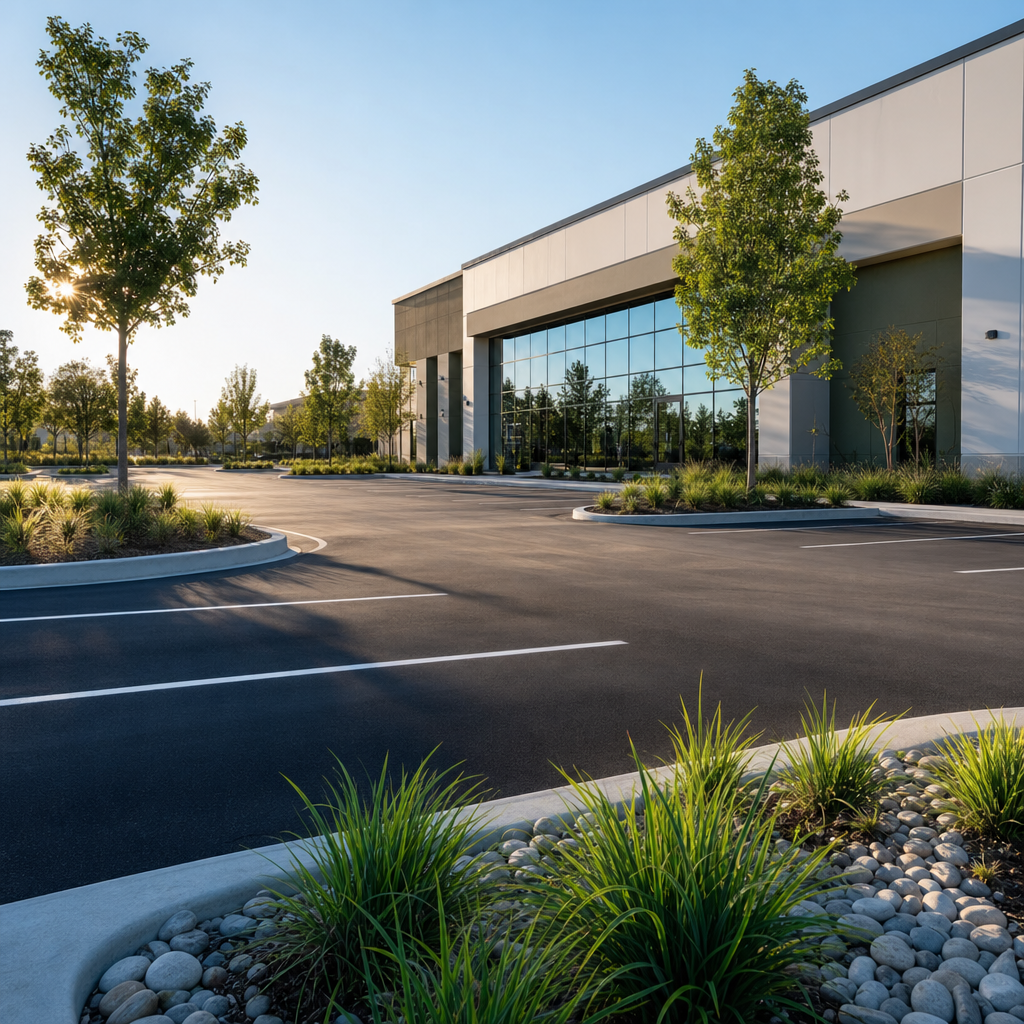
A parking lot is often the first physical interaction a customer has with your business. Before they walk through your door, they navigate your pavement — reading the lines, following the flow, and forming an impression. Yet for many property owners, parking lot design remains an afterthought. The reality is that a well-maintained, clearly marked parking area communicates professionalism, safety, and care. When striping, materials, and sustainability are considered together, the result is a parking environment that works harder for your property and your visitors.
The Role of Striping in Parking Lot Functionality
Parking lot striping is far more than painted lines on asphalt. It is the organizational backbone of any surface parking facility. Properly applied striping directs traffic flow, defines pedestrian walkways, designates accessible parking spaces, and maximizes the number of usable stalls within a given footprint. Without clear markings, even a well-paved lot becomes chaotic — drivers improvise, pedestrians are endangered, and liability exposure increases for property owners.
In high-traffic urban environments, the stakes are even higher. Cities like Denver experience significant seasonal wear on pavement surfaces due to temperature fluctuations, freeze-thaw cycles, and heavy vehicle use. Lines fade faster, and the need for periodic re-striping becomes a routine part of responsible property management rather than an optional upgrade.
Why Precision Matters in Line Marking
Striping is not simply a matter of running a machine across the pavement. Accurate measurements, proper layout planning, and the use of high-quality traffic paint or thermoplastic materials all determine how long the markings last and how effectively they serve their purpose. ADA compliance is another critical factor — accessible stall dimensions, access aisle widths, and signage placement must meet federal standards to avoid costly penalties. A professional striping contractor brings the expertise to handle all of these variables correctly the first time.
Integrating Natural Materials into Parking Area Surroundings
While the pavement surface and its markings are central to parking lot function, the surrounding environment plays an equally important role in the overall experience. Landscaping buffers, timber structures, shade canopies, and decorative fencing all contribute to how a parking area feels. Property owners who invest in these elements create spaces that feel welcoming rather than purely utilitarian.
One material that continues to find favor in outdoor structural applications around commercial properties is cedar. Its natural resistance to moisture, insects, and decay makes it a practical choice for pergolas, fencing, and shade structures adjacent to parking areas. If you are considering timber elements for your property’s exterior, understanding why cedar remains a preferred choice for outdoor structures can help you make a more informed investment that complements your paved surfaces beautifully.
Shade and Comfort as Design Priorities
In sun-intensive climates, shade structures near parking areas are not merely aesthetic — they reduce surface temperatures, protect vehicles, and encourage customers to linger rather than rush. A timber pergola or covered walkway connecting the parking lot to a building entrance creates a cohesive, thoughtful design that elevates the entire property. When these elements are built from durable natural materials and paired with a clean, well-striped parking surface, the combined effect is a property that stands out for all the right reasons.
Sustainability Trends Reshaping Parking Infrastructure
The conversation around parking lots has evolved significantly in recent years. What was once purely a functional concern is now intersecting with sustainability goals, smart city initiatives, and energy innovation. Across the globe, urban planners and engineers are rethinking how paved surfaces can contribute positively to the built environment rather than simply consuming space.
One compelling example of this shift comes from energy-harvesting pavement technology. Innovators have developed systems that capture kinetic energy from foot traffic and vehicle movement, converting it into usable electricity. Projects like Pavegen’s energy-harvesting smart street in London demonstrate how pavement itself can become an active participant in a building’s energy ecosystem. While this technology is still emerging, it signals a broader trend: the surfaces beneath our feet are becoming smarter, and property owners who stay ahead of these developments will be better positioned for the future.
Permeable Surfaces and Stormwater Management
Beyond energy harvesting, permeable pavement systems are gaining traction as municipalities tighten stormwater runoff regulations. Traditional asphalt creates impervious surfaces that channel rainwater into drainage systems, increasing the risk of flooding and water quality issues. Permeable alternatives allow water to filter through the surface and into the ground, reducing runoff and replenishing groundwater supplies. For property owners planning a new lot or undertaking a major resurfacing project, exploring permeable options alongside conventional asphalt is a worthwhile conversation to have with your contractor.
Professional Striping in Denver: What Property Owners Should Expect
Choosing the right contractor for your parking lot striping project is as important as the striping itself. In Denver’s competitive commercial real estate market, property owners need a partner who understands local regulations, climate considerations, and the specific demands of high-traffic surfaces. A reputable parking lot striping service in Denver will assess your existing layout, recommend improvements to traffic flow and ADA compliance, and apply durable materials that hold up through Colorado’s demanding seasonal conditions. The difference between a professional job and a rushed one becomes apparent within months — in fading lines, uneven spacing, and markings that fail to meet code.
Asphalt Coatings Company: A Trusted Name in Denver Pavement Services
Asphalt Coatings Company has built a strong reputation across the Denver metro area by delivering consistent, high-quality pavement maintenance services to commercial and residential clients alike. Their team brings deep expertise in surface preparation, sealcoating, crack repair, and line striping — offering property owners a comprehensive approach to parking lot care rather than piecemeal fixes. What sets them apart is their commitment to doing the job correctly from the start, using professional-grade materials and equipment that produce results built to last. For property managers and business owners who understand that their parking lot is an extension of their brand, working with a contractor of this caliber makes a measurable difference.
Conclusion: Treating Your Parking Lot as a Strategic Asset
A parking lot that is clean, clearly marked, and thoughtfully designed does more than accommodate vehicles — it communicates the values of the business or property it serves. By approaching parking lot management holistically, combining professional striping with quality surrounding materials and an awareness of emerging sustainability trends, property owners can transform what is often an overlooked space into a genuine asset. Whether you are refreshing faded lines, planning a new layout, or exploring how natural materials and smart design can enhance your property’s exterior, the investment in quality always pays dividends in safety, compliance, and curb appeal. Read More at https://mintpaldecor.org/