
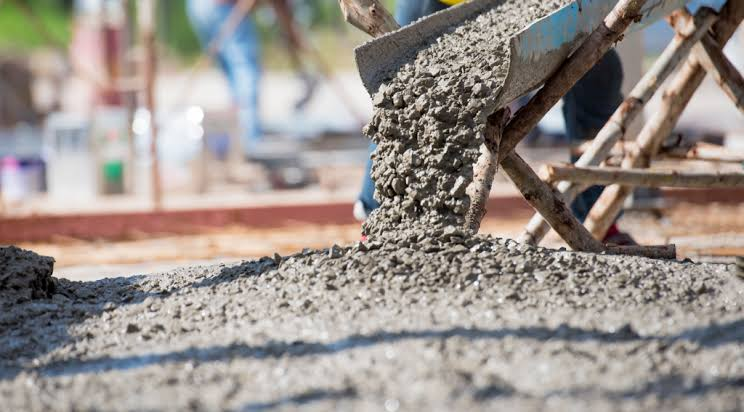
Pouring concrete without doing the math first is how a driveway ends up with a visible seam where the second truck’s mix started, or how a weekend patio project turns into three trips to the hardware store because nobody accounted for the extra fill under a sloped yard. A concrete calculator solves this before the first bag gets mixed, converting length, width, and depth into cubic yards or the exact number of 60 or 80 pound bags a project needs. That math is simple on paper, but the mistakes people make when skipping a proper concrete calculator are rarely about arithmetic. They come from bad depth assumptions, skipped waste factors, and shapes that are never quite the perfect rectangle they look like from the porch. This guide walks through how the formula actually works, where hand estimates go wrong, and how to read the number a calculator gives you so a small slab or a full driveway pour gets the right amount of material on the first try, with no early truck and no return trip to the store.
How a Concrete Calculator Turns Measurements Into Bags and Yards
The underlying formula never changes: length times width times depth, all in feet, divided by 27, gives cubic yards. Depth is where most people trip up, because it’s almost always listed in inches on the plan and has to be converted first (4 inches becomes 0.33 feet, 6 inches becomes 0.5 feet). Ready-mix suppliers sell by the cubic yard, so that number is what gets ordered from the truck. For smaller jobs using bagged mix, the same cubic footage gets divided by the yield of a single bag instead. Either way, the shape has to be broken into simple rectangles or cylinders first if it isn’t already one, since an L-shaped patio or a curved walkway calculated as a single average measurement will consistently come up short.
| Project Shape | Formula | Example |
|---|---|---|
| Rectangular slab | L × W × D (ft) ÷ 27 | 10 × 10 × 0.33 ÷ 27 = 1.23 cu yd |
| Footing (strip) | Length × Width × Depth ÷ 27 | 20 × 1 × 1 ÷ 27 = 0.74 cu yd |
| Round post hole | π × r² × Depth ÷ 27 | 1 ft radius, 3 ft deep = 0.35 cu yd |
| Stairs | Sum of individual step volumes | Calculate each tread/riser as its own rectangle |
Where Manual Estimates Go Wrong
Rounding depth to the “nearest easy number” is the most common error. A slab poured at an actual 4.5 inches instead of a planned 4 inches needs over 12 percent more concrete, and that gap only shows up once the truck is already short. Sloped yards create a second blind spot: measuring depth at one corner and assuming it holds across the whole pour ignores the extra fill needed on the low side. A third issue is skipping the waste factor entirely. Spillage, an uneven sub-grade, and minor form leakage routinely eat 5 to 10 percent of a pour, and ordering the bare minimum leaves no room for any of it. None of these are calculator failures. They’re measurement and input failures that happen before the math ever runs.
| Bag Size | Approx. Yield | Bags per Cubic Yard |
|---|---|---|
| 40 lb | 0.30 cu ft | ~90 bags |
| 60 lb | 0.45 cu ft | ~60 bags |
| 80 lb | 0.60 cu ft | ~45 bags |
Yield figures vary slightly by brand and mix design. Check the yield printed on the specific bag before finalizing a large order, especially for fiber-reinforced or high-strength mixes.
Doing the Math by Hand vs. Letting a Tool Run It
Hand calculations work fine for a single rectangular slab, but they get unreliable fast once a project has multiple shapes, mixed depths, or a waste factor layered on top. This is the point where an online concrete calculator earns its keep: it runs the same formula instantly, applies a waste percentage automatically, and converts the result into both cubic yards and bag counts without a calculator app and a scratchpad. The trade-off is that any tool is only as accurate as what gets entered into it, so correct measurements still matter more than which method does the multiplying.
| Factor | Manual Calculation | Online Tool |
|---|---|---|
| Speed | Slower, especially for multiple shapes | Instant |
| Waste factor | Easy to forget | Often built in |
| Unit conversion | Manual, error-prone | Automatic |
| Bag count output | Requires separate step | Included |
| Accuracy of inputs | Depends on the person measuring | Depends on the person measuring |
Frequently Asked Questions
How much concrete do I need for a 10×10 slab?
At a standard 4-inch depth, a 10×10 slab needs about 1.23 cubic yards of concrete. Round up to 1.4 or 1.5 cubic yards once a waste factor is included, since sub-base irregularities almost always eat into the exact number.
How many 80 lb bags of concrete make a yard?
It takes roughly 45 bags of 80 lb pre-mixed concrete to equal one cubic yard, since each bag yields about 0.6 cubic feet and a cubic yard holds 27 cubic feet.
Should I add extra concrete for waste?
Yes. A 5 to 10 percent waste allowance is standard for spillage, uneven sub-grade, and form leakage. Larger or more irregular pours should sit closer to the 10 percent end.
Does a concrete calculator account for gravel base?
No, a standard calculator only measures the concrete layer itself. Gravel or compacted base material sits underneath and has to be calculated and ordered separately, using its own depth measurement.
What depth should I use for a driveway versus a walkway?
Walkways and patios are typically poured at 4 inches. Driveways that carry vehicle weight are usually poured at 5 to 6 inches, and areas expecting heavier trucks may need more. Check local code before finalizing depth.