When designing high-performing residential layouts or corporate executive suites, interior planners spend considerable time calculating human foot traffic and optimizing ergonomics. However, a less visible structural variable quietly impacts the long-term durability of internal furnishings: the regional microclimate. Across coastal regions, interior spaces encounter persistent fluctuations in relative humidity and ambient temperature throughout the year. For delicate electronic components, archival papers, and large storage installations, these cyclical atmospheric shifts present a constant threat. Mitigating this environmental stress requires looking beyond mass-produced, veneer-clad composite options and investing in vertical storage systems engineered to accommodate the dynamics of natural materials.
The Physics of Volatile Moisture Adsorption in Fiberboards
The widespread use of mass-produced engineered wood—such as medium-density fiberboard (MDF) and particleboard—in modern shelving units stems from its low manufacturing cost and uniform surface appearance. However, these materials possess a major engineering flaw: high hygroscopic vulnerability. MDF is constructed by binding pulverized wood fibers together with synthetic urea-formaldehyde resins under intense heat and pressure. While this matrix remains flat in laboratory conditions, its internal structure lacks a natural cell grain network to channel moisture evenly.
When a high-density office or home library is exposed to spikes in coastal summer humidity, the unsealed raw core of a composite shelf absorbs moisture directly from the air like a sponge. This absorption breaks down the internal resin bonds, causing a permanent degradation known as thickness swelling or delamination. Because composite materials lack internal structural memory, they cannot shrink back to their original dimensions when the heating system dries out the winter air. The shelf remains warped, significantly lowering its load-bearing capacity and accelerating the breakdown of surface laminates.
The Structural Advantages of Solid Timber Grain Architecture
To resist the destructive cycles of seasonal moisture adsorption, architectural frameworks depend on the natural grain mechanics of solid hardwoods. Unlike composite matrices,
organic timber—such as northern oak, hard maple, walnut, and cherry—features a complex network of cellular walls built to manage moisture distribution.
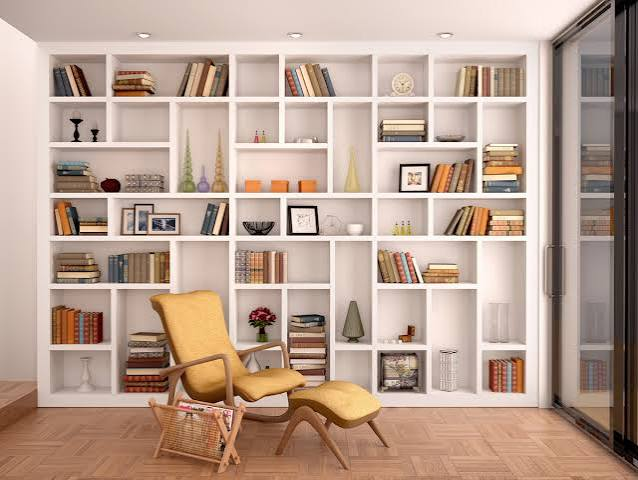
While solid wood expands and contracts in response to environmental shifts, it does so predictably along specific mechanical axes. Experienced furniture artisans utilize specialized joinery techniques, such as floating tenons, sliding dovetails, and elongated screw slots, to allow the wood panels to expand and contract freely across its grain width without splitting or warping the main framework. Placing an authentic, custom-fitted Maine bookcase into a coastal workspace provides a resilient physical anchor that handles fluctuating moisture levels without a millimeter of permanent frame deflection. The solid wood fibers absorb moisture during humid cycles and release it cleanly during dry periods, maintaining absolute structural alignment across decades of heavy material storage.
[Composite Core Board] –> High Moisture Ingress –> Fiber Rupture –> Permanent Swelling & Sag [Solid Hardwood Unit] –> Predictable Expansion –> Floating Joint –> Natural Shrinkage & Alignment
Mitigating Long-Term Creep Deflection Under High Loading
Beyond resisting environmental moisture cycles, vertical storage architectures must be calculated to prevent a long-term mechanical failure known as “creep deflection.” When a shelf is continuously loaded with heavy legal volumes, financial ledgers, or industrial reference manuals, the material is under constant downward force. Over time, this constant load causes microscopic shifts within the cellular structure of the shelving material, leading to a permanent downward bow.
[Fiberboard Core] –> Microscopic Core Shifting –> Permanent Creep Deflection at 15 lbs/ft [Kiln-Dried Timber] –> Cell Wall Alignment –> Zero Structural Deformation up to 50 lbs/ft
The threshold for creep deflection varies dramatically across different material classifications. A standard three-quarter-inch composite shelf will begin to bow permanently under a continuous load of just fifteen pounds per linear foot. Solid kiln-dried hardwoods, by contrast, possess dense, interlocking cellulose structures that distribute weight evenly across the entire grain span, supporting up to fifty pounds per linear foot without any measurable structural deformation. This high structural resistance ensures that the shelf lines remain completely level, preventing heavy volumes from sliding inward and maintaining clean, professional lines across the full depth of the office layout.
Protecting Interior Spaces From the Inside Out
As modern building designs focus increasingly on indoor air quality and structural predictability, asset procurement strategies must prioritize long-term material stability. A professional office or high-end residential interior cannot maintain its value if its primary storage assets are vulnerable to moisture warping, laminate peeling, or sudden load failures.
By treating vertical storage fixtures as core structural elements rather than temporary interior decorations, forward-thinking operators protect their spatial investments. Selecting solid, meticulously dried hardwood furnishings shields high-value reference libraries from environmental wear, isolates sensitive documents from moisture traps, and guarantees a safe workspace for generations. True architectural quality is built from the core out, ensuring that your furniture infrastructure stands strong against changing seasonal conditions.