
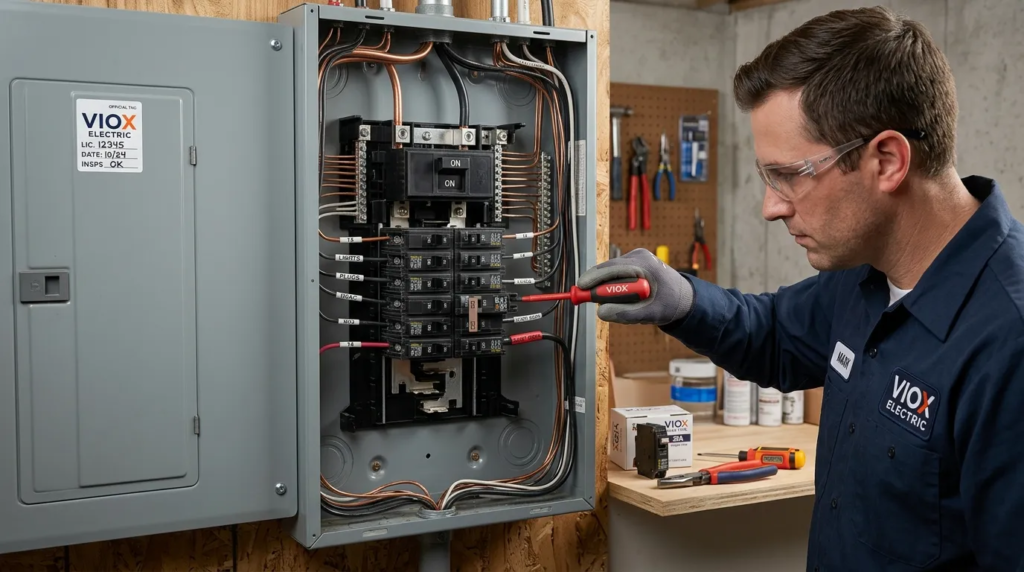
In the management of modern production corridors, operational efficiency is closely tied to supply-chain predictability. When an unexpected electrical component failure occurs within a primary distribution board or a motor control center, the resulting system downtime immediately impacts corporate profitability. Finding an exact-fit component to replace a damaged or worn asset in an older panel framework presents an immediate challenge for maintenance managers. If the facility team relies exclusively on factory ordered, newly manufactured hardware for obsolete configurations, they often face long lead times that disrupt delivery schedules. To minimize this operational friction, industrial operators are adopting balanced component sourcing strategies that prioritize both immediate physical availability and rigorous, documented testing standards.
The True Cost of Assembly Lane Stagnation
The financial consequences of an unmanaged power disruption accumulate rapidly on a factory floor. Unlike a standard commercial office environment, where a localized power failure might affect only a small group of workstations, an interruption in an industrial distribution loop can take high-capacity machinery, pneumatic automation strings, and material-handling systems offline simultaneously.
When an older, high-capacity overcurrent protection device suffers mechanical fatigue or contact pitting from years of thermal exposure, it can no longer safely carry its designated current load. If the device experiences a nuisance trip or a complete internal mechanism failure during peak production hours, restarting the assembly corridor requires tracing the
fault and immediately replacing the damaged unit. If the specific switchboard configuration uses a discontinued or obsolete frame style, waiting for a custom factory run can take weeks, leaving the enterprise exposed to massive daily losses, unfulfilled client contracts, and idle labor overhead.
Mitigating Sourcing Volatility via Strategic Vintage Classifications
Overcoming these infrastructure bottlenecks requires moving away from single-source procurement models. When an older distribution system requires an identical replacement unit to restore an active branch line, modifying the entire metal-clad enclosure or rewriting the busway layout is rarely cost-effective. Such modifications demand lengthy municipal building permitting processes, complex architectural drawings, and extensive facility-wide blackouts.
[Legacy Component Failure] –> Factory Order Delay –> Extended Facility Blackout –> Supply-Chain Fracture [Balanced Sourcing Logic] –> Immediate Parts Match –> Fast-Track Onsite Swapping –> Production Momentum
Engineering and procurement teams solve this availability crisis by integrating certified recertified components alongside factory-fresh hardware. Utilizing fully verified new and remanufactured circuit breakers from Essential Electric Supply into an existing panelboard matrix allows a facility to restore service within hours rather than weeks. This blended procurement approach ensures that structural components, high-tensile silver contacts, and molded composite housings align perfectly with older, existing busbar configurations. By matching original equipment manufacturer (OEM) operational parameters across both new and recertified classifications, industrial buyers secure immediate access to discontinued frame styles that have been off the market for years. This rapid turnaround allows the facility to avoid expensive physical overhauls while ensuring the distribution loop matches the strict design criteria of the active industrial grid.
Verifying Dielectric Strength and Contact Resistance Calibration
While speeding up component sourcing is essential for reducing facility downtime, speed can never come at the expense of absolute physical safety. When a high-voltage circuit breaker is installed in a high-capacity switchboard, the device must be capable of safely containing and extinguishing very high short-circuit fault currents. If a replacement unit with compromised internal insulation or warped contact linkages is installed onto an active busbar, it cannot safely quench an electrical arc. This failure can result in catastrophic component destruction, violent phase-to-phase short circuits, and severe arc flash hazards for operators working near the panelboard.
[Visual Inspection Only] –> Conductive Dust Unchecked –> Internal Dielectric Breakdown –> Terminal Arc Flash [Comprehensive OEM Testing] –> Micro-Ohm Contact Check –> Certified Insulation Shield –> Safe Energy Containment
To prevent these operational hazards, industrial procurement protocols mandate that all recertified and remanufactured assets undergo rigorous engineering evaluations before field deployment. Specialized technicians use advanced micro-ohmmeters to measure internal contact resistance, ensuring the current-carrying paths do not generate excessive operational heat. High-potential (hipot) testing verifies the dielectric strength of the molded thermoset resin housing, ensuring no sub-micron airborne dust or micro-cracks have compromised the internal phase-to-phase insulation boundaries. Only after a component successfully replicates its original factory trip curve under full load can it be securely introduced to the line, protecting high-cost downstream automation assets and shielding maintenance teams from hidden field hazards.
Insulating the Enterprise from Capital Depreciation
As global production systems shift toward highly integrated, continuous manufacturing lines, power infrastructure reliability dictates long-term business resilience. A scaling enterprise cannot maintain its market presence if its primary revenue corridors are vulnerable to prolonged parts shortages or unmanaged infrastructure wear.
By maintaining a balanced inventory approach that blends cutting-edge new-line production assets with fully certified recertified hardware, forward-thinking operations future-proof their utility infrastructure. This method optimizes capital expenditures, eliminates the supply chain vulnerabilities associated with obsolete panel configurations, and maintains strict compliance with workplace safety standards. Protecting your electrical foundation from the inside out ensures that your facility remains flexible, cost efficient, and fully prepared to meet production quotas without unexpected downtime. Read More at https://mintpaldecor.org/