Evaporative cooling offers a way to cool homes in hot, dry climates without relying on a traditional refrigeration cycle. By using water, airflow, and ventilation, these systems can reduce indoor temperatures efficiently. Knowing the available system types and their limits helps homeowners decide whether this cooling method fits their needs.
Traditional air conditioning is not the only way to stay comfortable during a hot summer. Evaporative coolers use water evaporation to reduce the temperature of warm outdoor air before moving it indoors. For homeowners considering evaporative cooling options in the Central Valley, the region’s generally dry conditions can make this approach especially effective. These systems can use less electricity than compressor-based air conditioning while bringing a steady supply of fresh air into the home. Still, proper sizing, ventilation, water flow, and maintenance matter. Learning how evaporative cooling works can help you decide whether it suits your home and comfort expectations.
How Evaporative Cooling Works
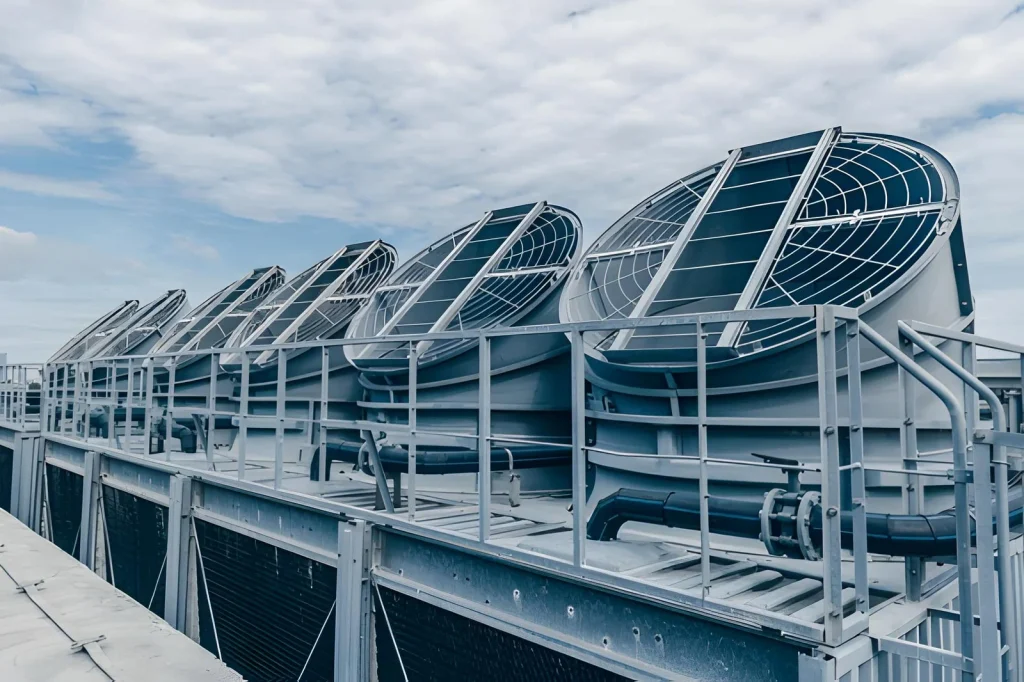
An evaporative cooler draws warm outside air through water-saturated pads. As the water evaporates, it absorbs heat and cools the passing air. A blower then distributes that air through the home.
Unlike central AC, evaporative cooling does not depend on a refrigeration compressor. It also needs an exit path for indoor air. Open windows or properly designed vents allow warmer air to leave as fresh, cooled air enters.
Types of Evaporative Cooling Systems
The main designs differ in how they handle air and moisture:
- Direct cooling: Air passes through wet pads, becoming cooler and more humid.
- Indirect cooling: A heat exchanger cools the supply air without adding as much moisture.
- Indirect-direct cooling: Two stages combine indirect cooling with direct evaporation for greater temperature reduction.
Direct systems are often the simplest option for dry climates. More advanced designs may offer better humidity control, but the right choice depends on the home, climate, and cooling goals.
When Evaporative Cooling Can Beat HVAC
Evaporative cooling has its strongest advantage in hot, low-humidity weather. Dry air allows water to evaporate more readily, which improves cooling performance. These systems can also use less electricity because their primary electrical components are typically a fan and water pump rather than a compressor.
For homeowners comparing evaporative cooling options in the Central Valley, lower electrical demand, fresh-air circulation, and simpler operation can be attractive benefits. Conventional central AC may still be better when humidity rises or when precise indoor temperature control is a priority.
What to Check Before Choosing One
Start with system size, airflow, and ventilation. A cooler that is too small may struggle during peak heat, while poor airflow can leave some rooms uncomfortable.
Maintenance matters too. Cooling pads, water lines, pumps, and blower components should be checked regularly. Mineral buildup and dirty pads can reduce performance. Professional installation, repair, and seasonal maintenance can help keep an evaporative cooling system operating properly during warmer months.
FAQs About Evaporative Cooling
Do Evaporative Coolers Need Open Windows?
Yes. Direct systems usually need open windows or vents so warm indoor air can escape while cooled outdoor air enters.
Do They Work Well in Humid Weather?
Performance drops as humidity rises because less water can evaporate into already-moist air.
Do Evaporative Coolers Use Refrigerant?
Standard evaporative coolers rely on water and airflow rather than the refrigerant-based process used by conventional AC.
How Often Should the System Be Maintained?
Regular seasonal checks are wise, especially for cooling pads, water flow, mineral buildup, and blower operation.
Wrapping Up
Evaporative cooling can be a practical alternative to conventional air conditioning in a hot, dry climate. It cools incoming air through water evaporation, uses continuous fresh airflow, and may require less electricity than compressor-based systems. Direct, indirect, and two-stage designs offer different levels of moisture control and cooling performance.
Before choosing a system, consider local humidity, home size, ventilation, water use, and maintenance needs. Proper sizing and installation are essential because even an efficient cooler will underperform if airflow is poor or the equipment does not match the home. For homeowners researching evaporative cooling options in the Central Valley, professional guidance can help determine whether this type of cooling is suitable and keep the system working through installation, repair, and seasonal service. The best choice is the one that balances comfort, climate, operating costs, and reliable long-term performance.Read more at https://mintpaldecor.org/.